Explore the Canton Network Application Quickstart demo
Business case
The Canton Network (CN) Quickstart is scaffolding to support development efforts to build, test, and deploy CN applications. It resolves infrastructure problems that every CN application must solve. Use the CN Quickstart Application so you and your team can focus on building your application, instead of build systems, deployment configurations, and testing infrastructure.Core business operations
The Quickstart features a sample licensing app to demonstrate Canton development patterns. In the app, providers sell time-based access to their services. Users pay with Canton Coin (CC) and manage payments through a Canton Wallet. The app involves four parties:- The Application Provider who sells licenses.
- The Application User who buys licenses.
- The underlying Amulet token system that handles payments, using CC.
- The DSO Party, the Decentralized Synchronizer Operations Party who operates the Amulet payment system. In CN, this is the Super Validators.
Issuing a license
The provider creates a new license for an onboarded user. The license starts expired and needs to be renewed before use.Requesting a license renewal
The provider creates a renewal request, generating a payment request for the user. A matching CC payment request is created on the ledger.Paying for a license renewal
The user approves the payment through their Canton Wallet, which creates an accepted payment contract on the ledger.Renewing the license
The provider processes the accepted payment and updates the license with a new expiration date.Overview
This section helps you become familiar with a Canton Network (CN) business operation within the CN App Quickstart. The App Quickstart application is intended to be extended by your team to meet your business needs. When you are familiar with the App Quickstart, review the technology choices and application design to determine what changes are needed. Technology and design decisions are ultimately up to you. If you find errors, please contact your representative at Canton Network.Prerequisites
Install the CN App Quickstart before beginning this demonstration.Walkthrough
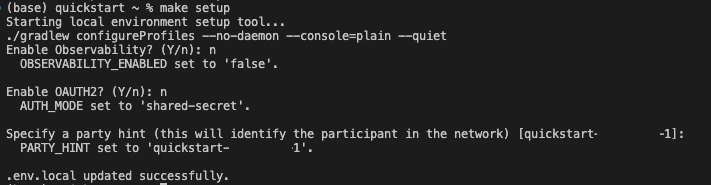
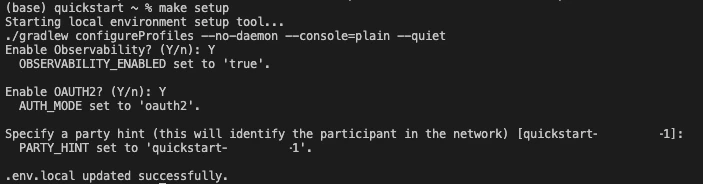
The CN App Quickstart can run with or without authorization, based on your business needs. Toggle authorization with themake setup command in the quickstart subdirectory. make setup asks to enable Observability, OAUTH2, and specify a party hint. In this demo, we disable TEST MODE, use the default party hint, and show OAUTH2 as enabled and disabled. When OAUTH2 makes a difference, we display both paths, one after the other. You can follow your path and ignore the other. You may enable Observability, but it is not required for this demo.
Choose your adventure:
make setup without OAUTH2:
make setup with OAUTH2:
Build Quickstart
Build and start App Quickstart:
Safari users may need to manually map the
app-provider subdomain in /etc/hosts. Use the terminal command sudo nano /etc/hosts to add:127.0.0.1 app-provider.localhostThis tells your system to resolve app-provider.localhost to your local machine. Then save and close the file. Restart Safari.Login
OAUTH2 disabled When OAUTH2 is disabled, the homepage presents a simple login field. Begin by logging in as theAppProvider by entering “app-provider” in the User field.
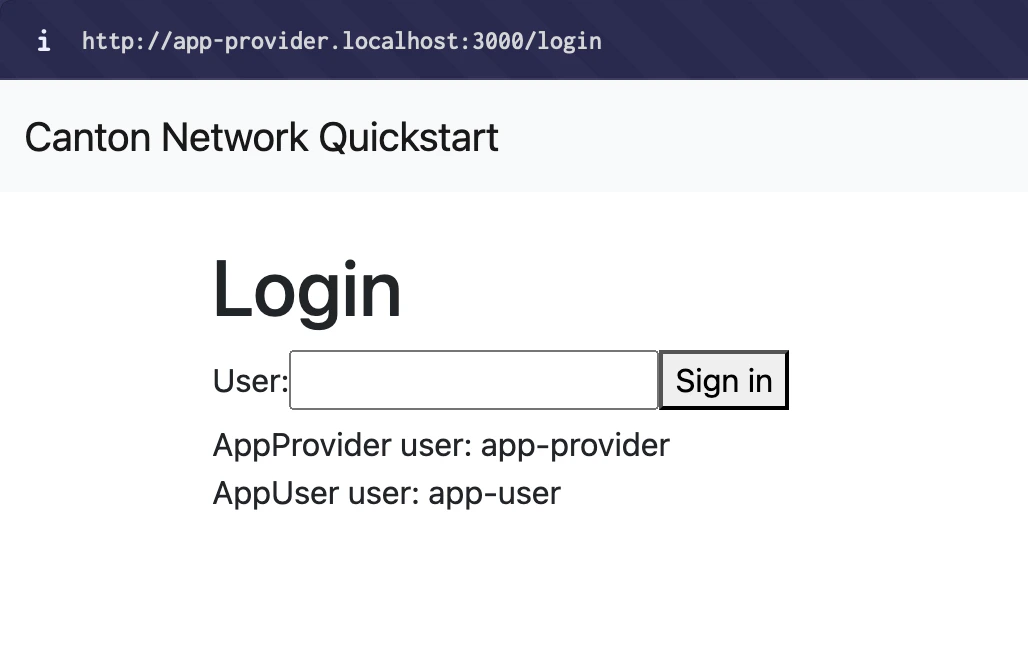
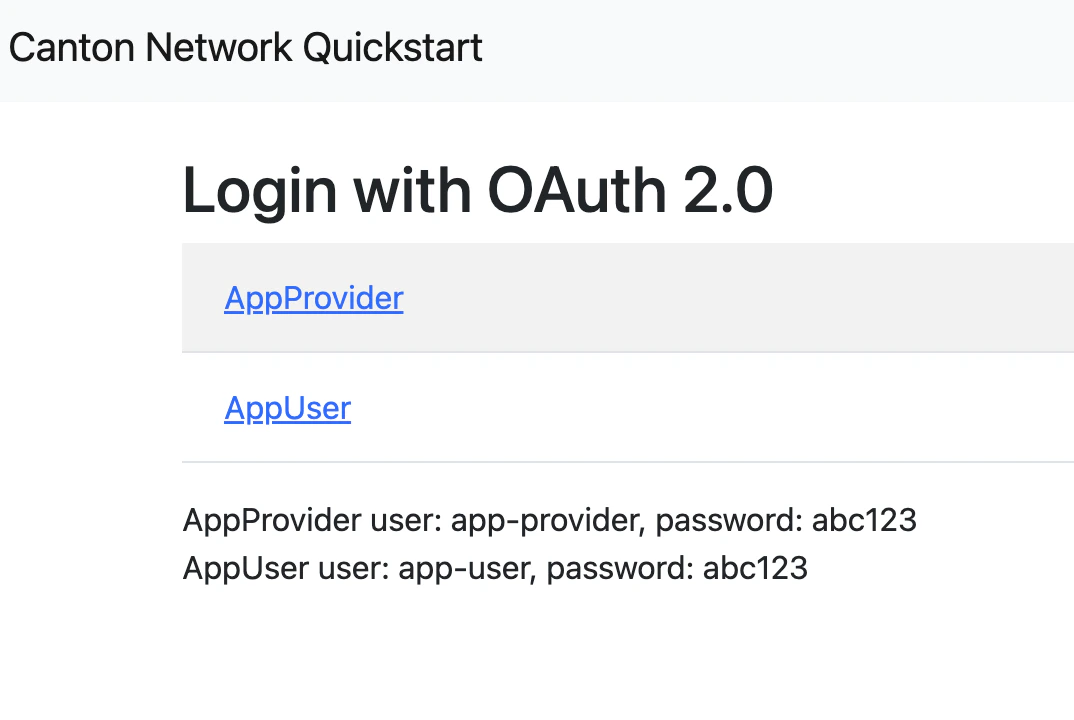
AppProvider’s username is “app-provider” and the password is “abc123” (all lowercase).
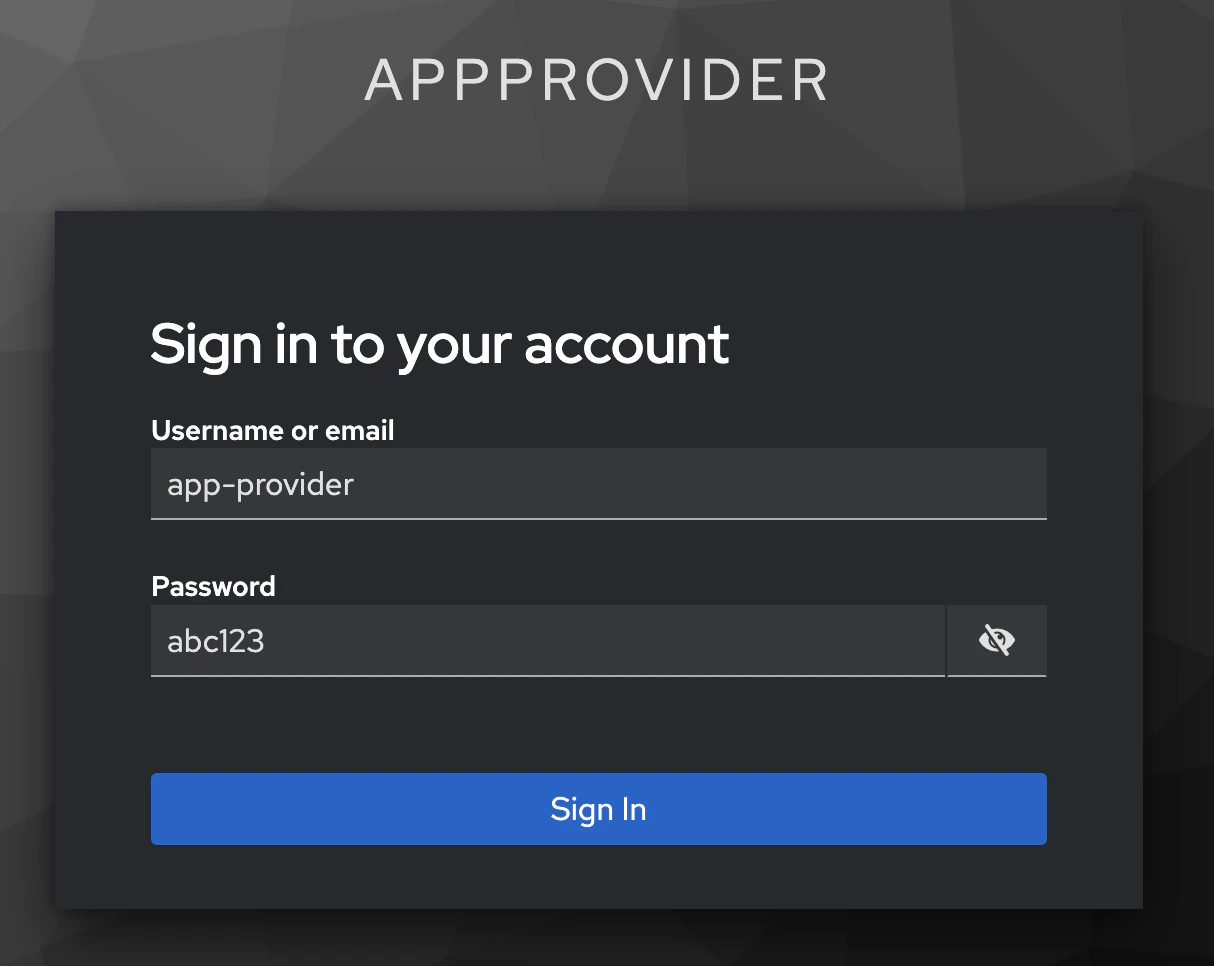
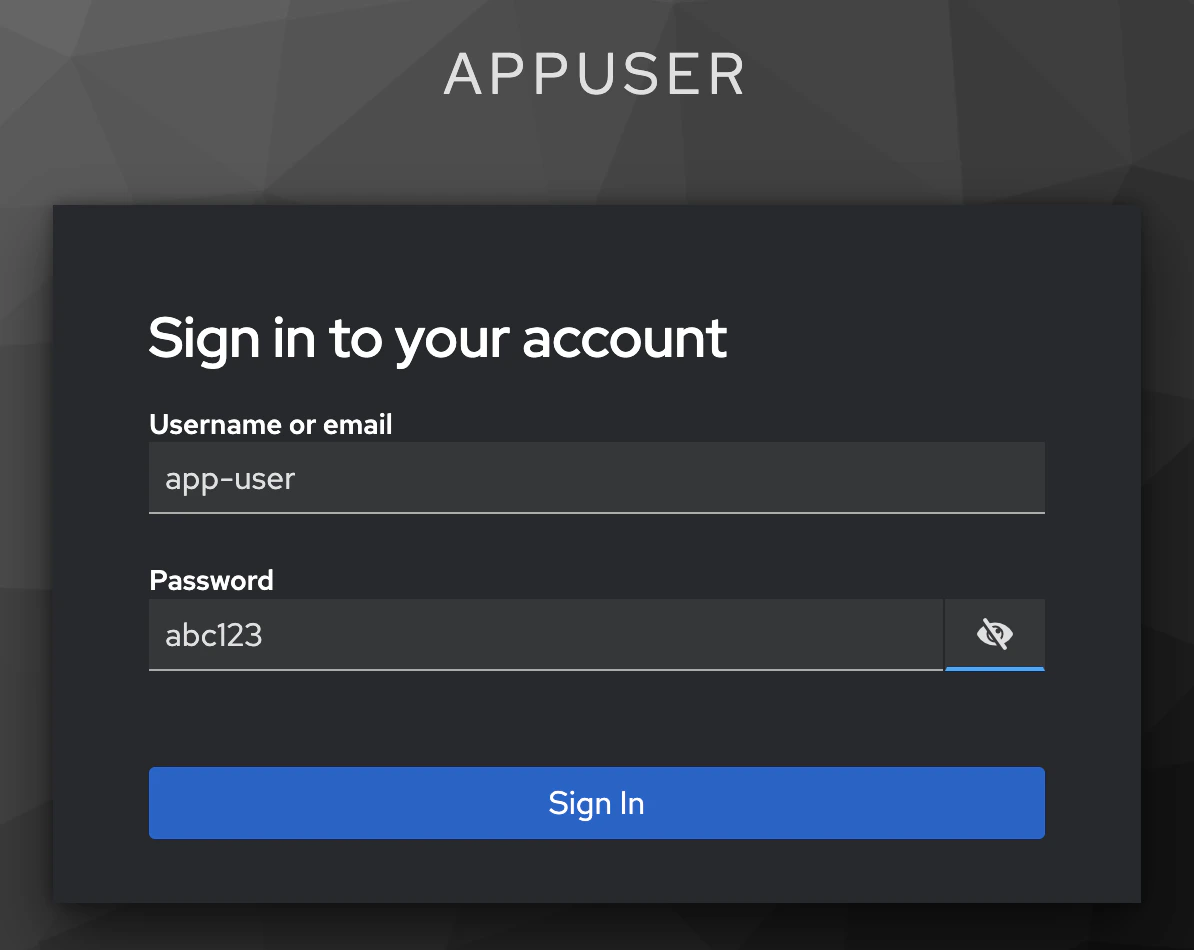
Login with app-provider with keycloak.
Fill in the login credentials: username: app-provider, password: abc123
The App Installs Menu
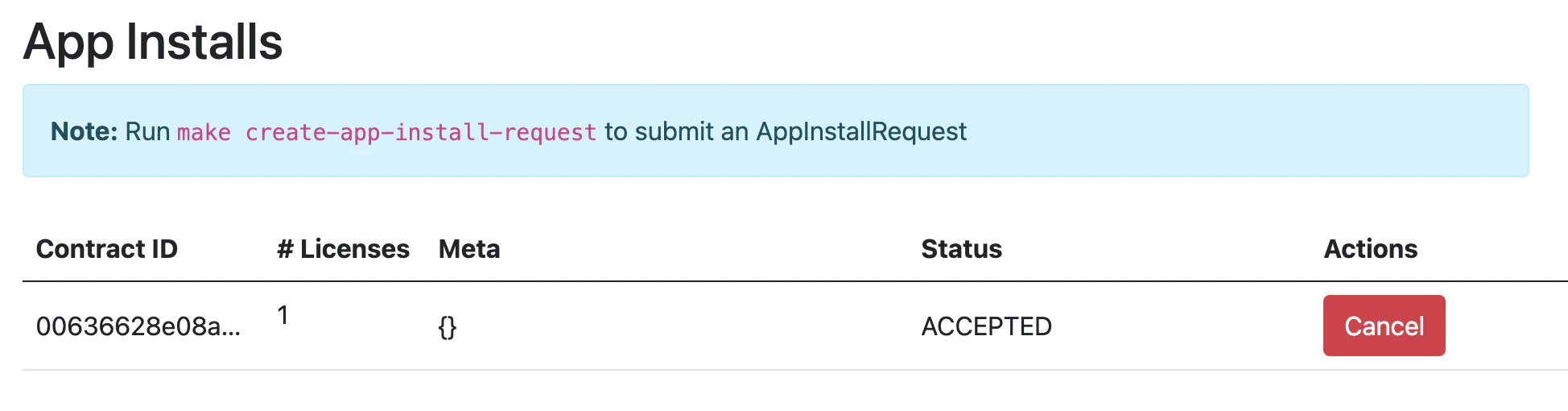
Once you are logged in select AppInstalls in the menu.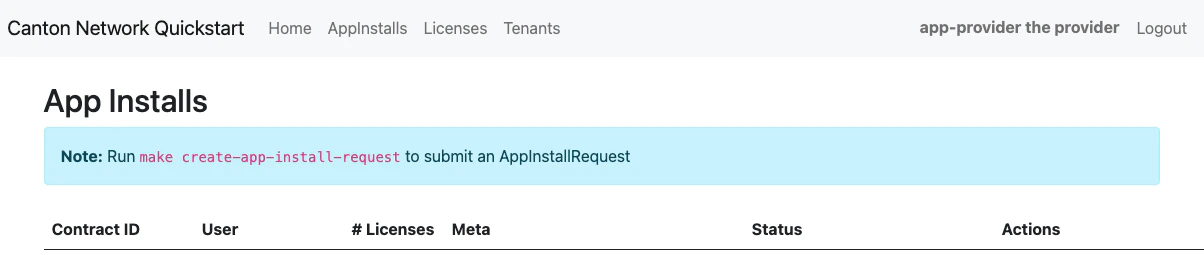
/quickstart/ run:
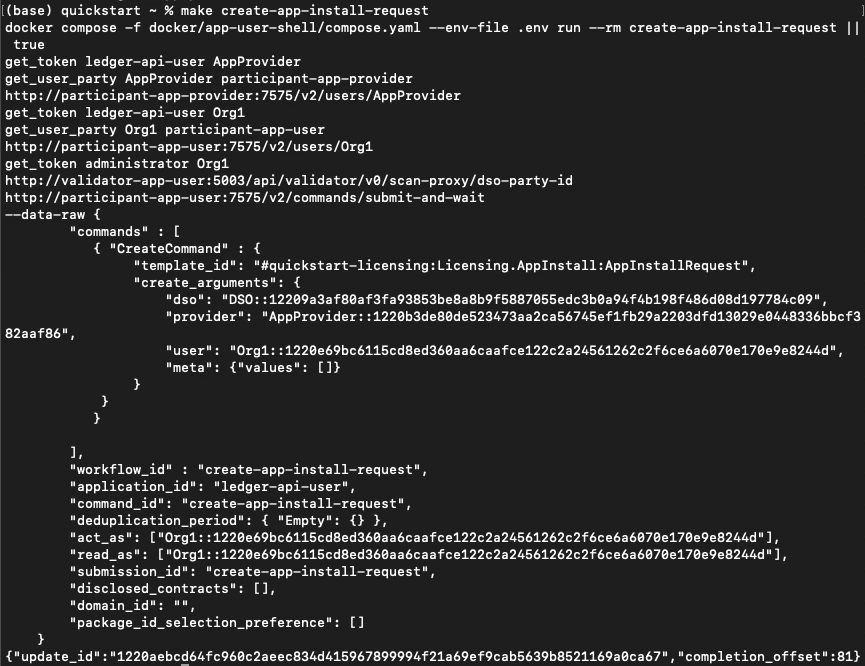
If your machine is not powerful enough to host
LocalNet or if the docker containers are not responsive then the response may show a failure with status code 404 or 000 (as shown in the image below). Increasing Docker memory limit to at least 8 GB should allow the LocalNet containers to operate properly.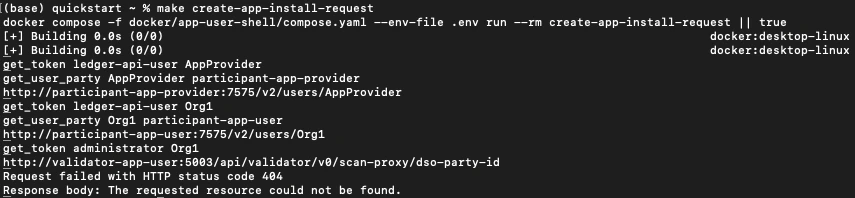
AppInstallRequest
The install request appears in the list. Click Accept.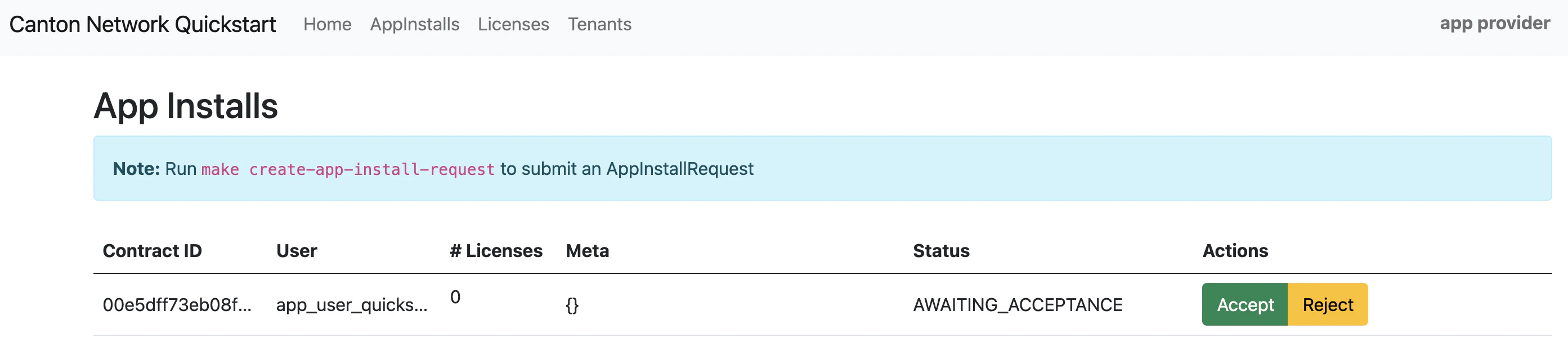
AppInstallRequest is Accepted.
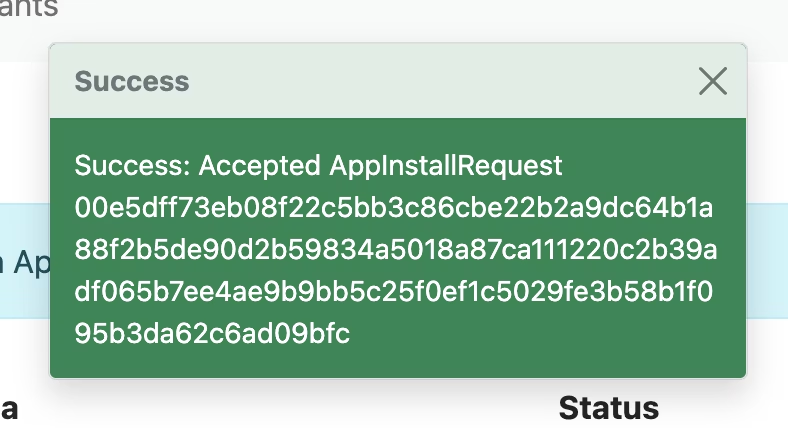
Create a license
Click Create License. The license is created and the “# Licenses” field is updated.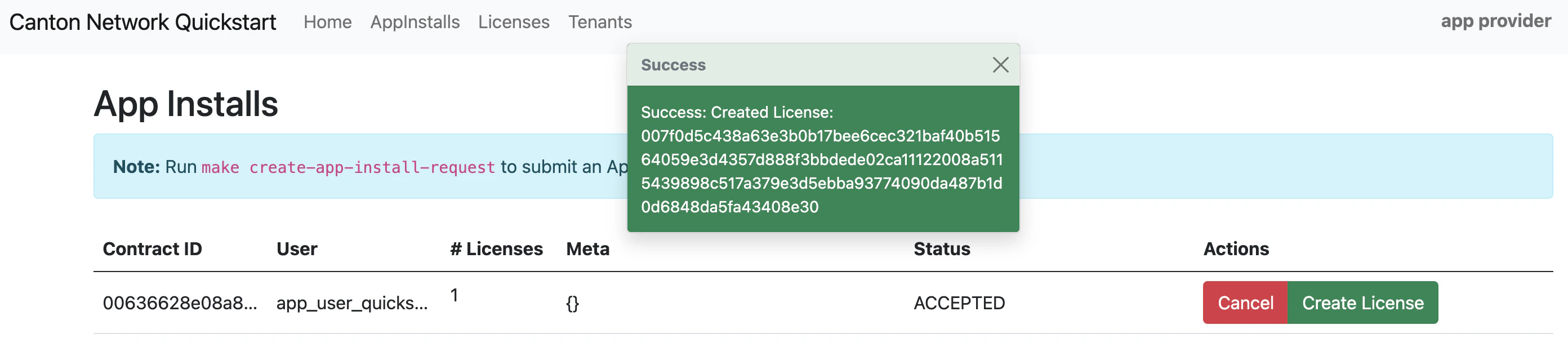

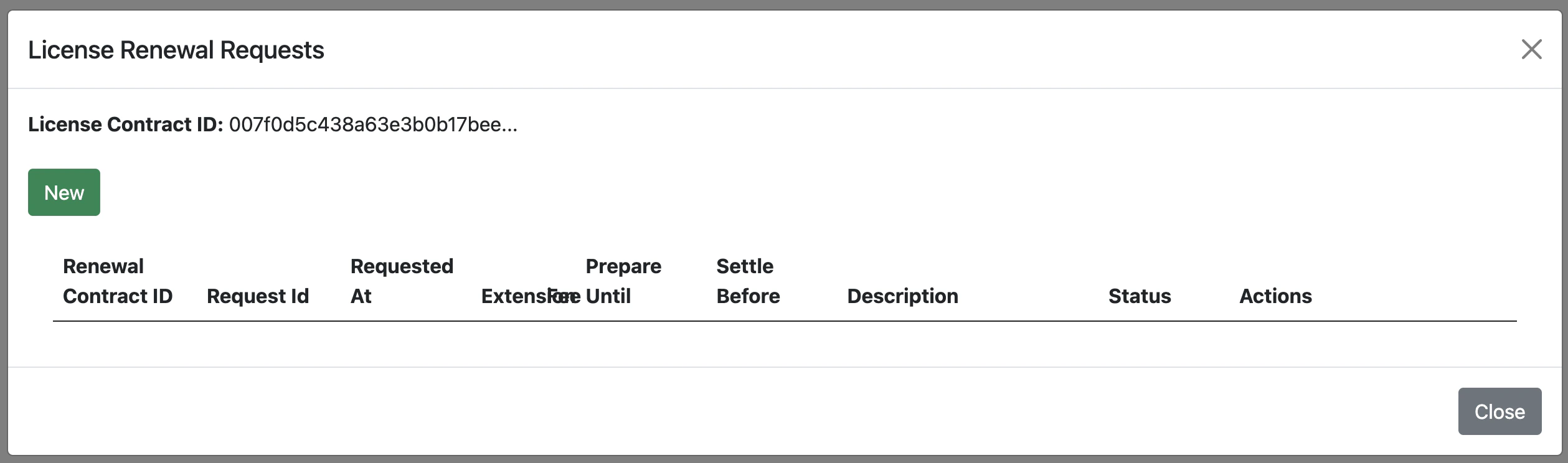
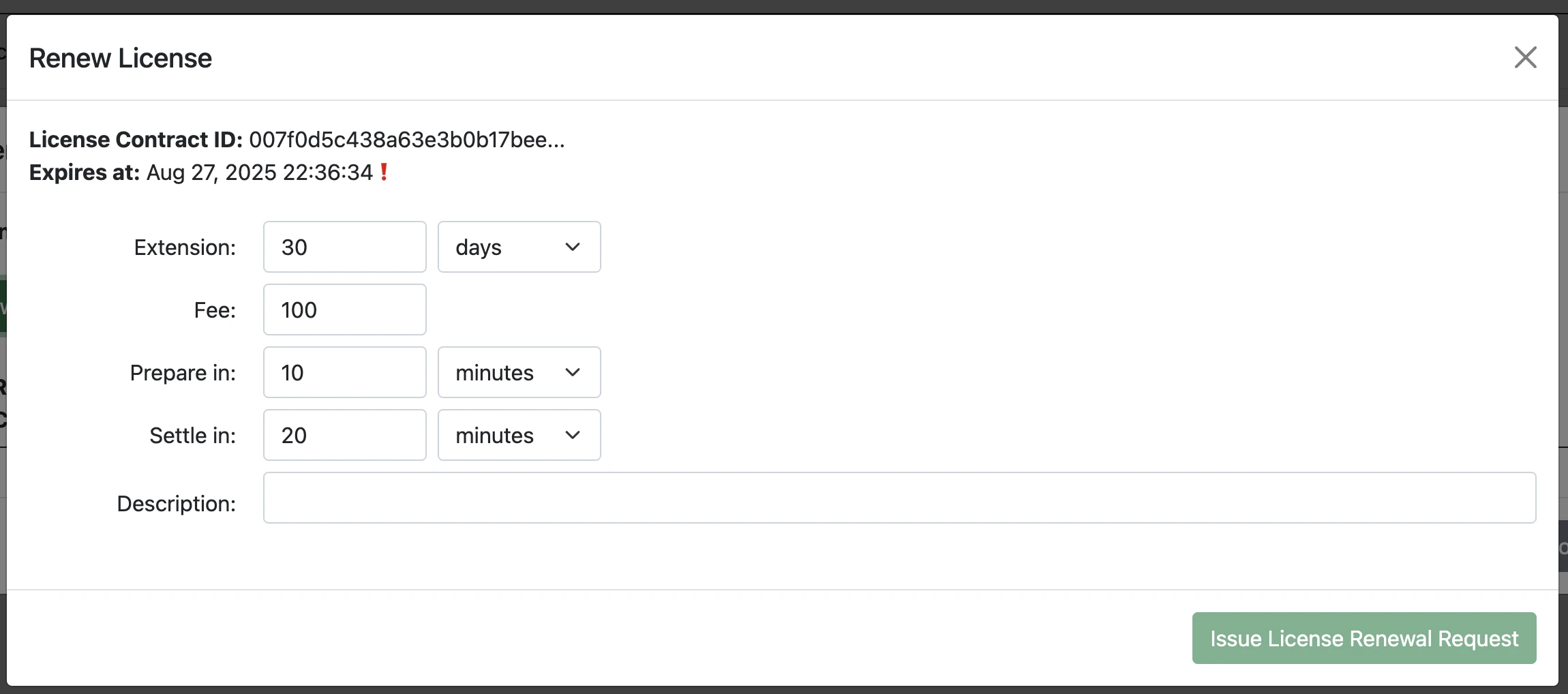
completeRenewal. After that, the allocation will be expired.
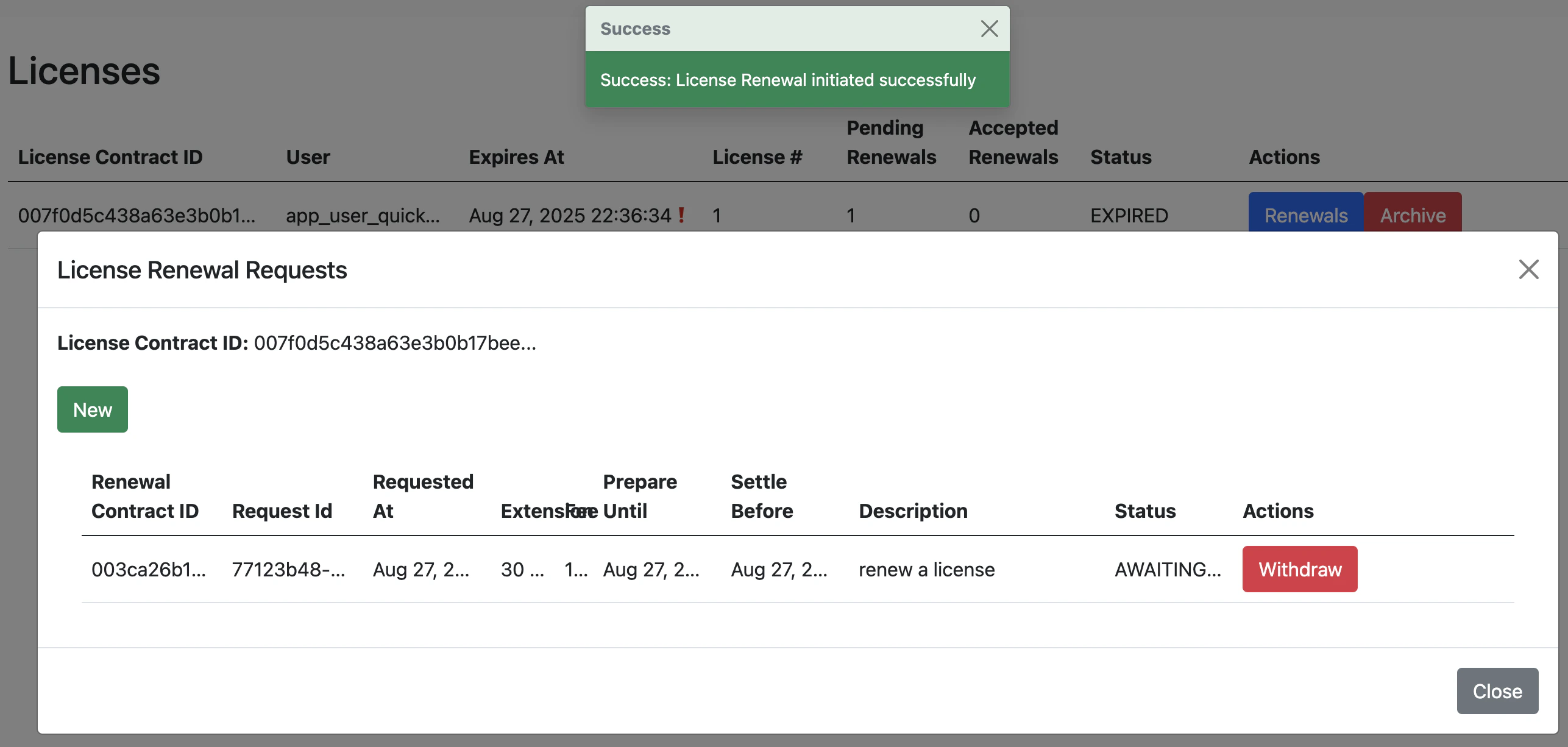
Click Issue License Renewal Request.
Make a payment
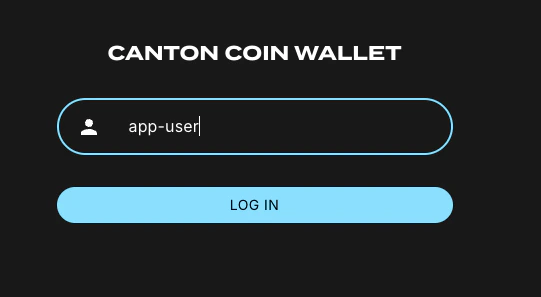
To make payment, navigate to the Canton Wallet at http://wallet.localhost:2000/allocations and log in asapp-user if prompted.
You can find the wallet’s location by:
- Reading the LocalNet Application UIs reference.
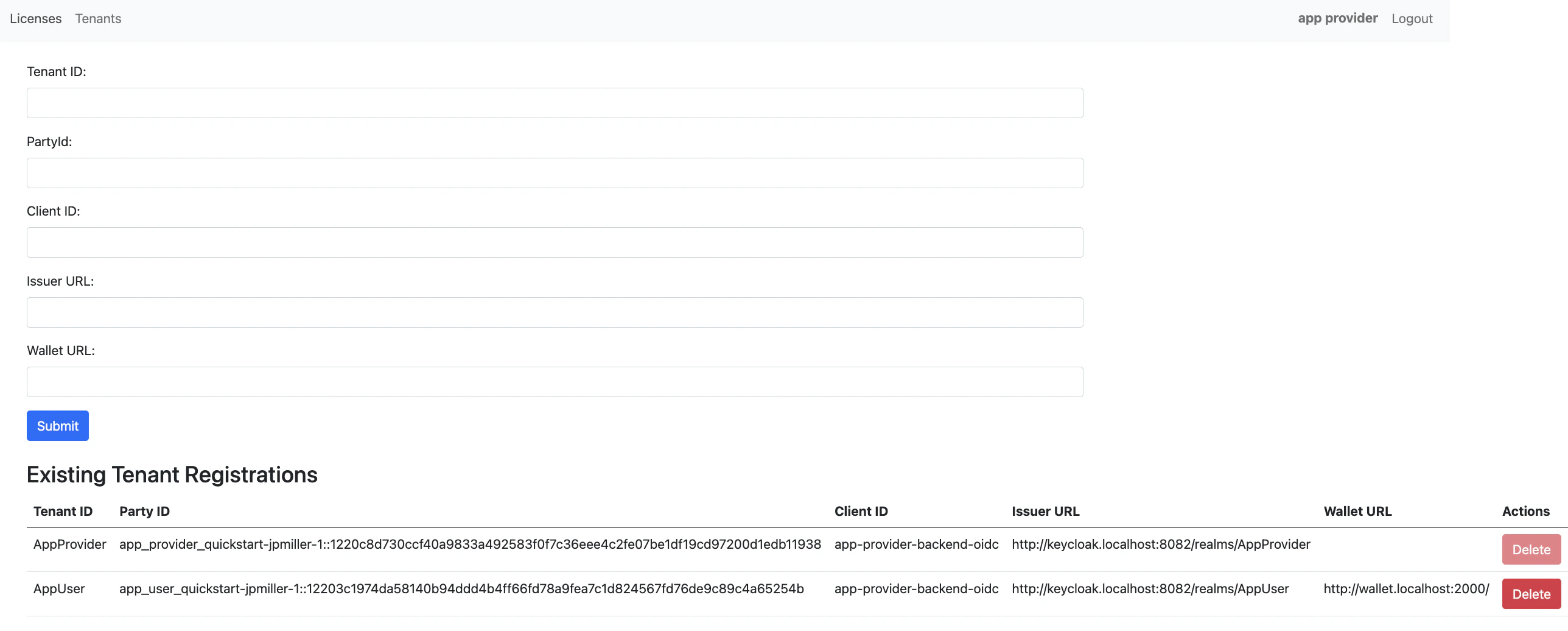
- Navigating to the App Provider’s “Tenants” menu.
- Logging into the app as
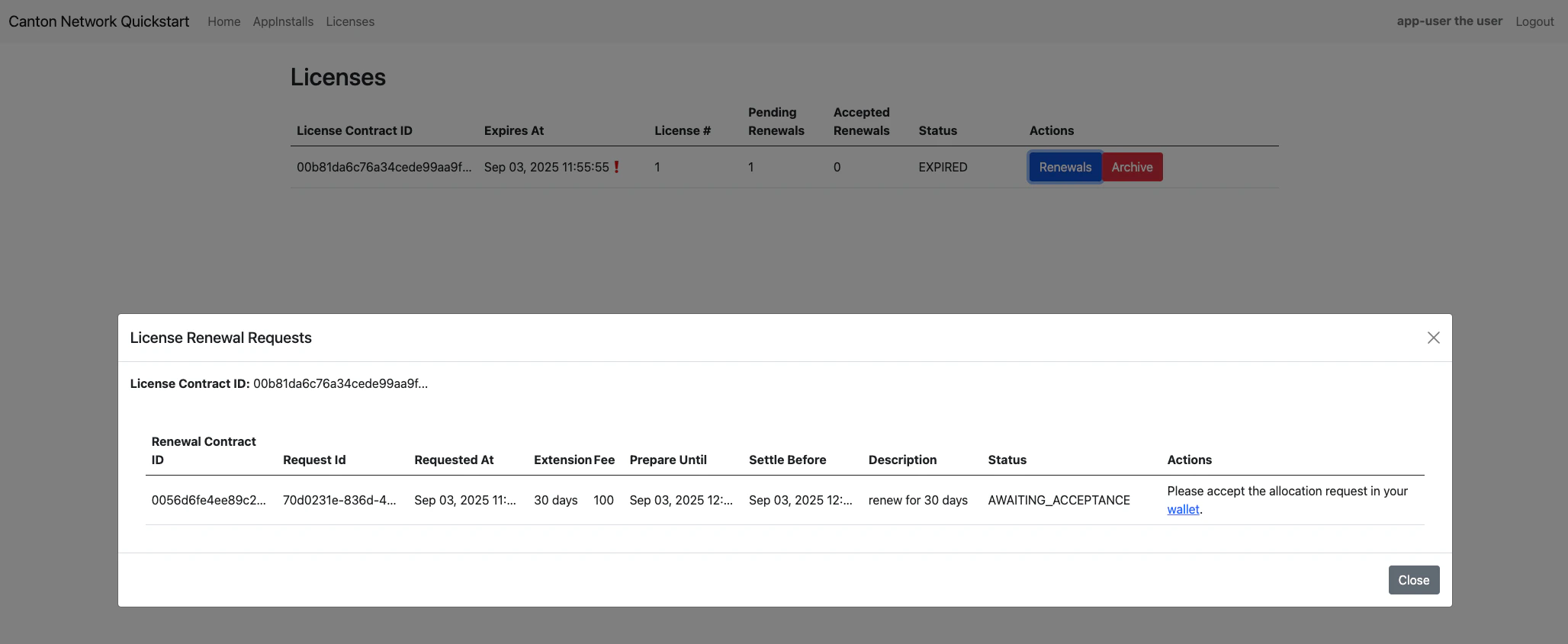
app-user, navigating to the Licenses menu, then clicking the Renewals action.
app-user.
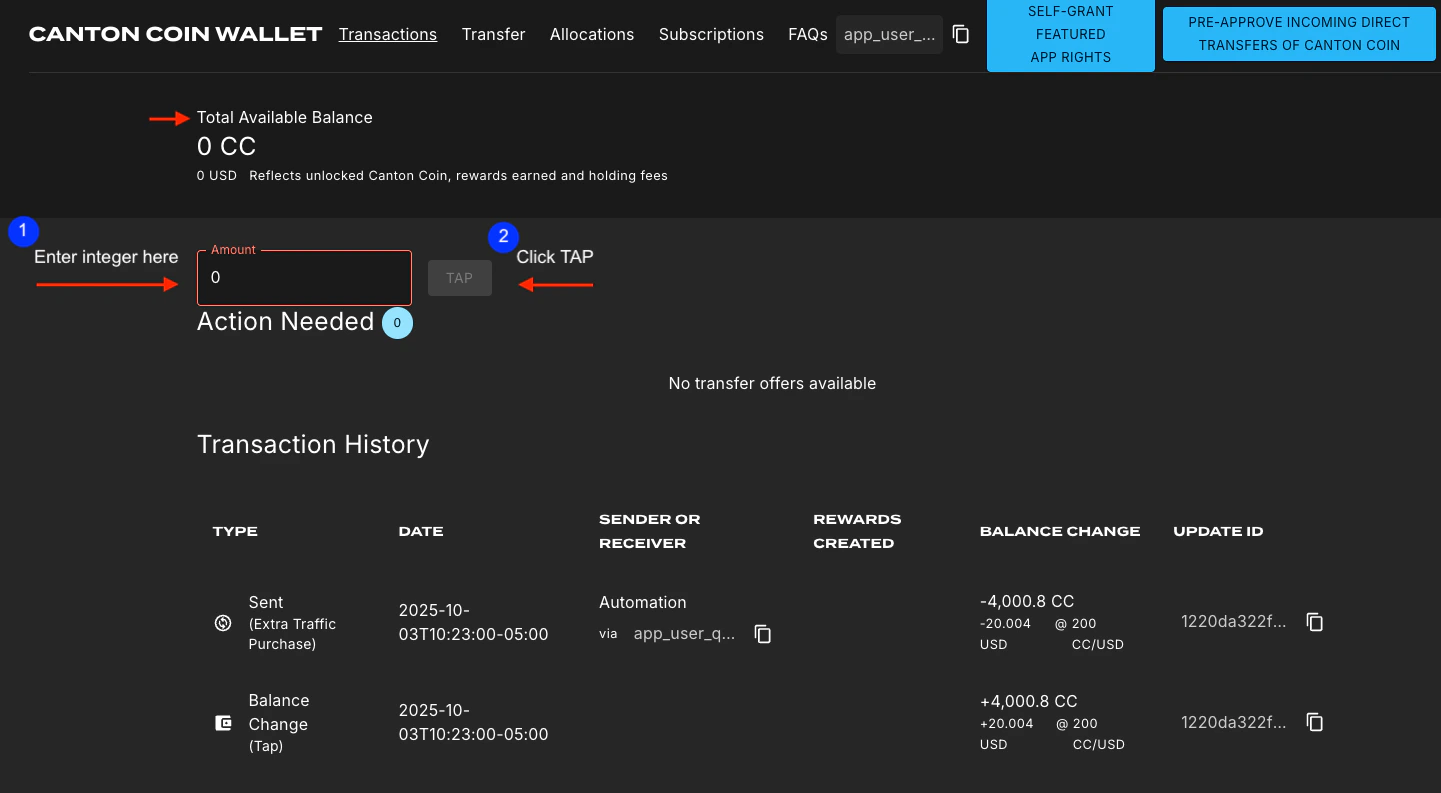
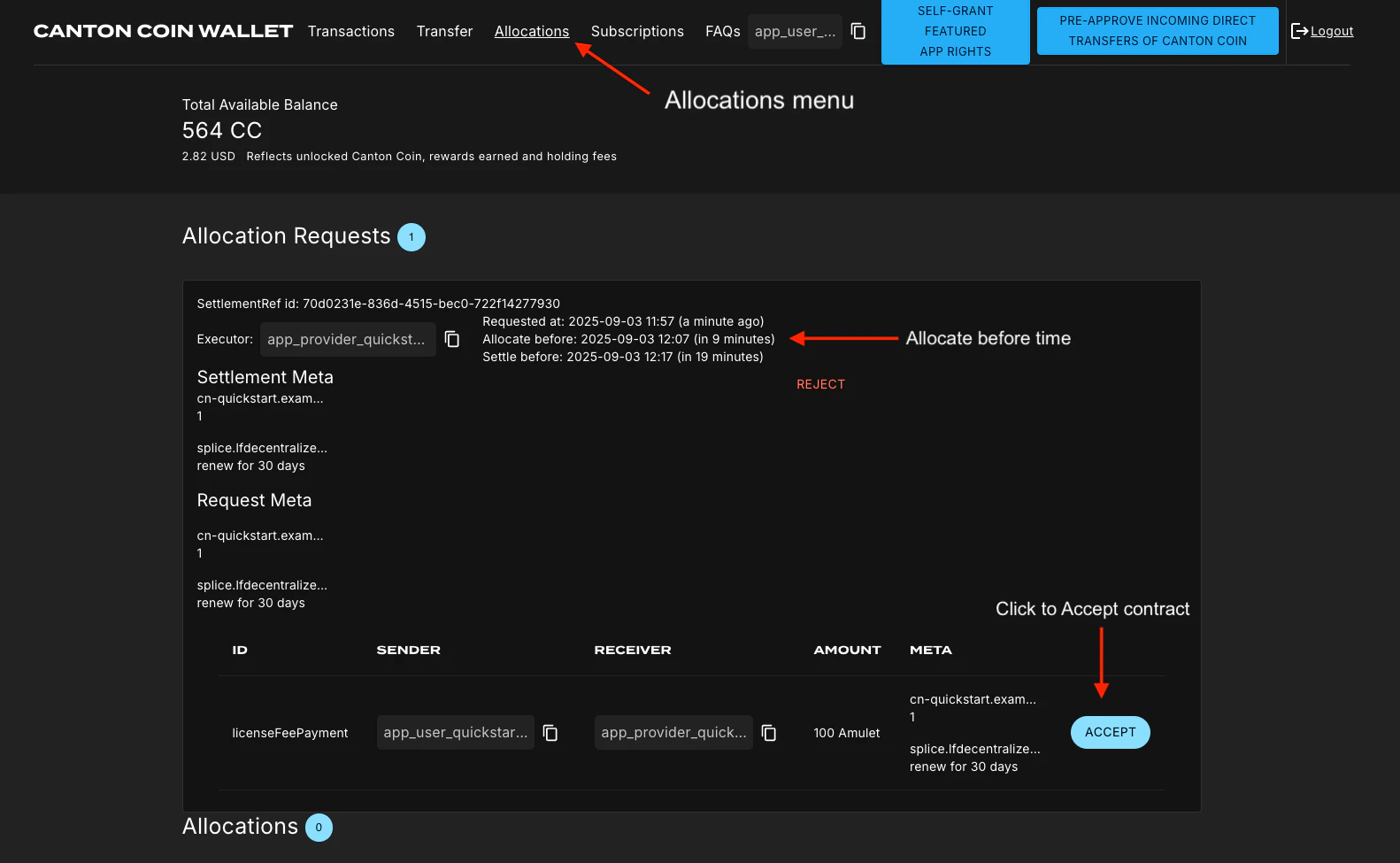
licenseFeePayment information.
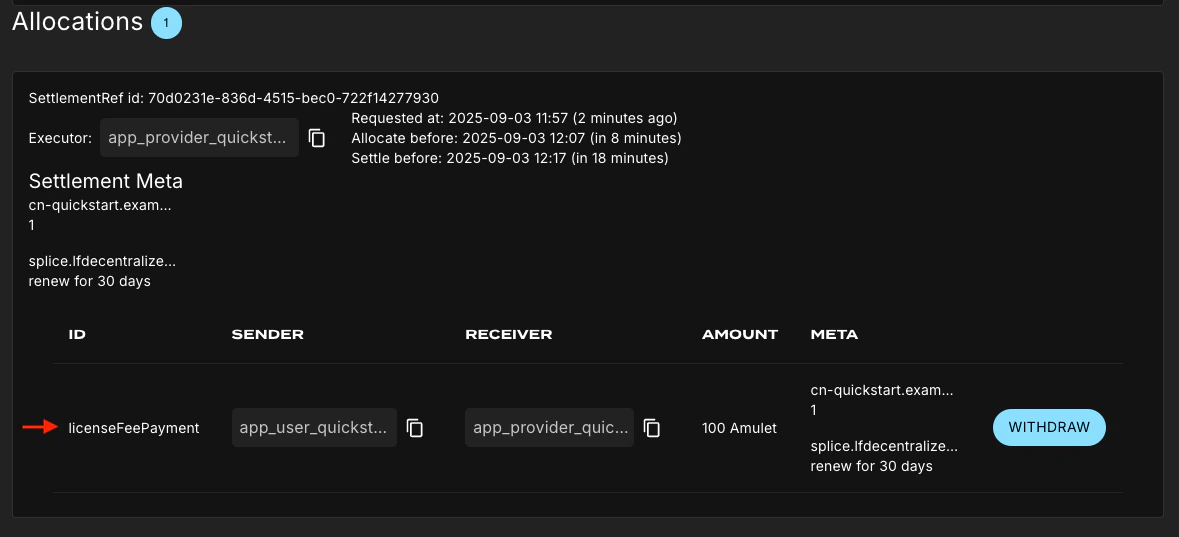
Renew the license
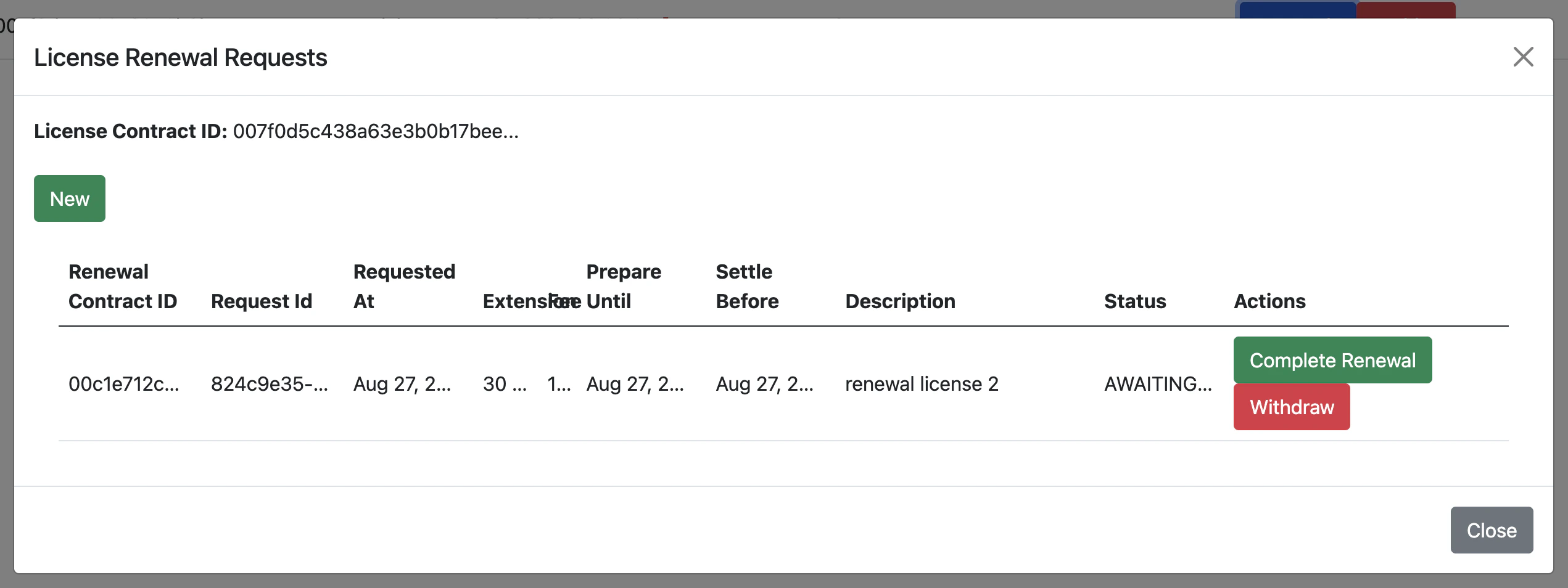
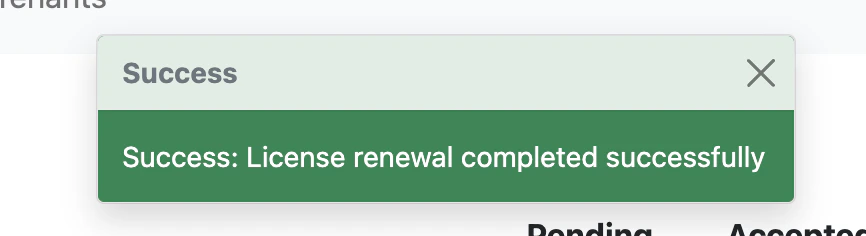
Return to the Quickstart as theAppProvider. In the Licenses menu, select Renewals. This opens the License Renewals Request modal. Click the green Complete Renewal button.
AppProvider and log in as AppUser.
OAUTH2 disabled
If OAUTH2 is disabled, simply log in as app-user.
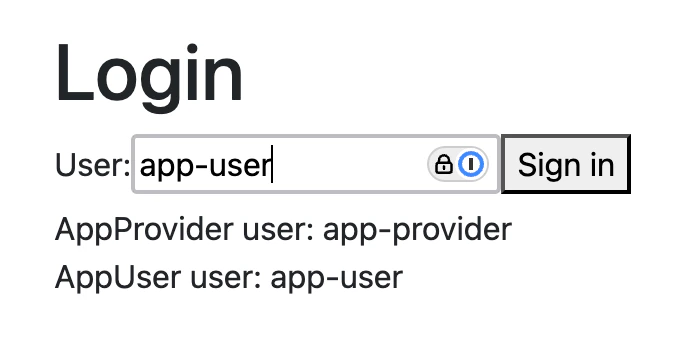
AppUser with “app-user” as the username and the password is “abc123”.

Canton Console
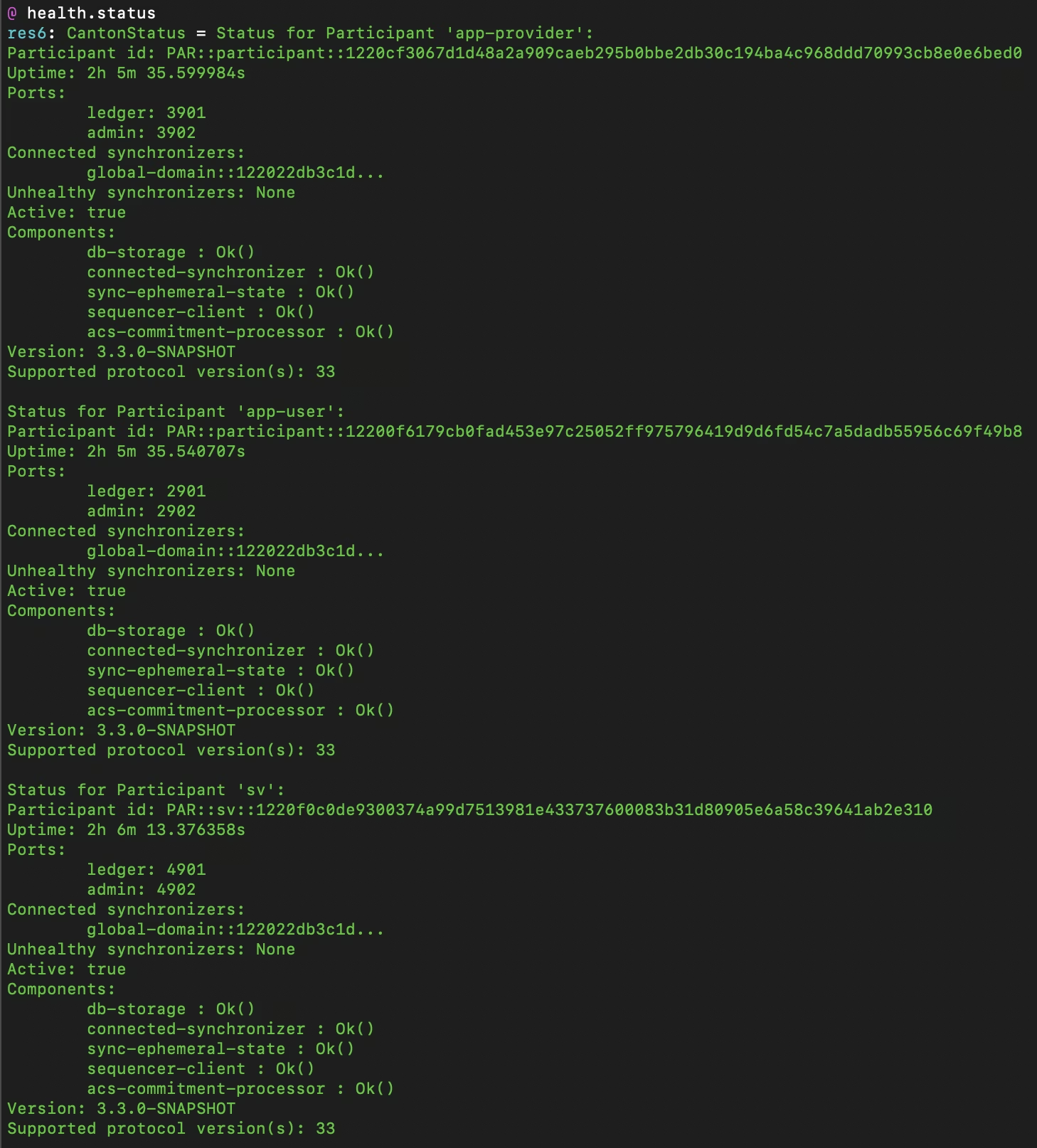
The Canton Console connects to the running application ledger. The console allows a developer to bypass the UI to interact with the CN in a more direct manner. For example, in Canton Console you can connect to the Participant to see the location of the Participant and their synchronizer domain.
Activate the Canton Console in a terminal from the
quickstart/ directory. Run:
participants and participants.all commands, respectively.
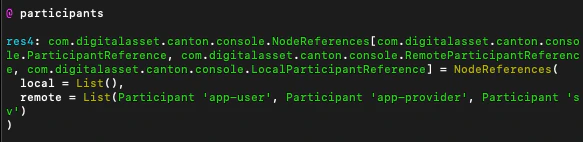

LocalNet, you can connect to any of the listed participants. Connect to the app user’s validator with



Daml Shell
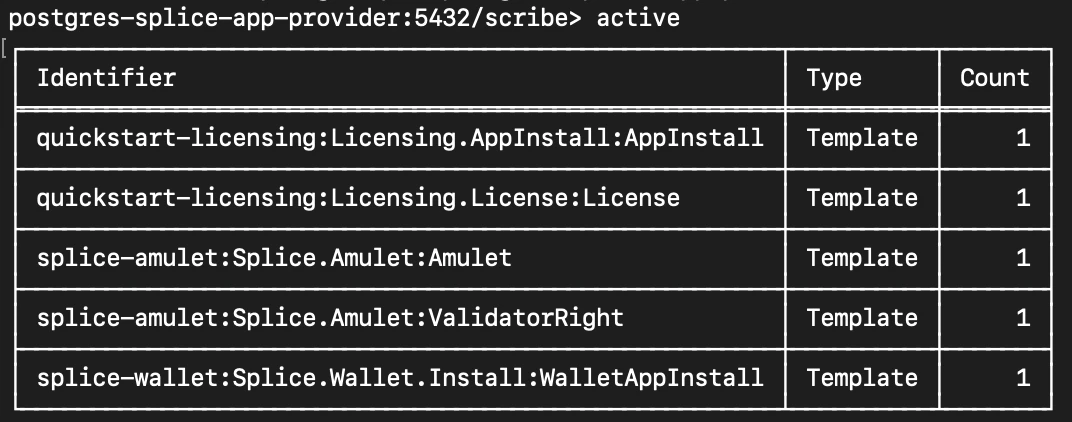
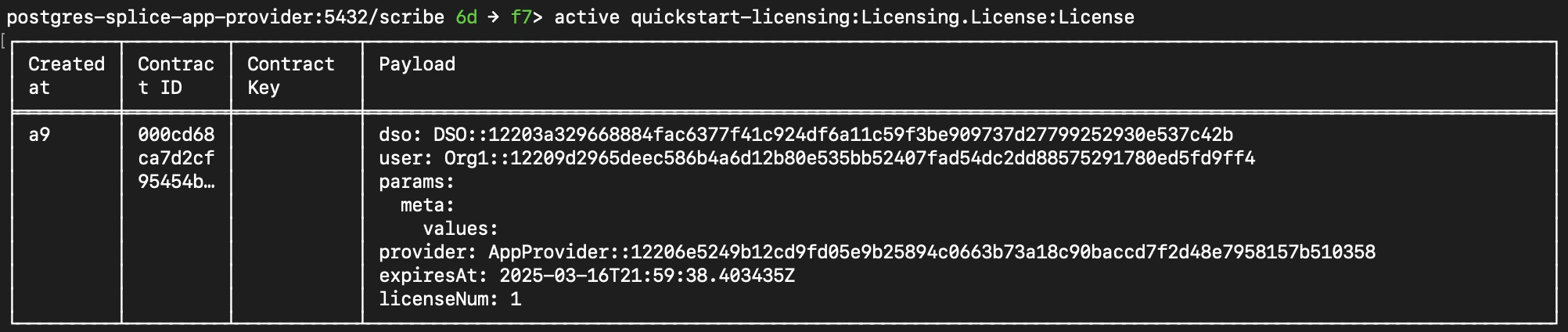
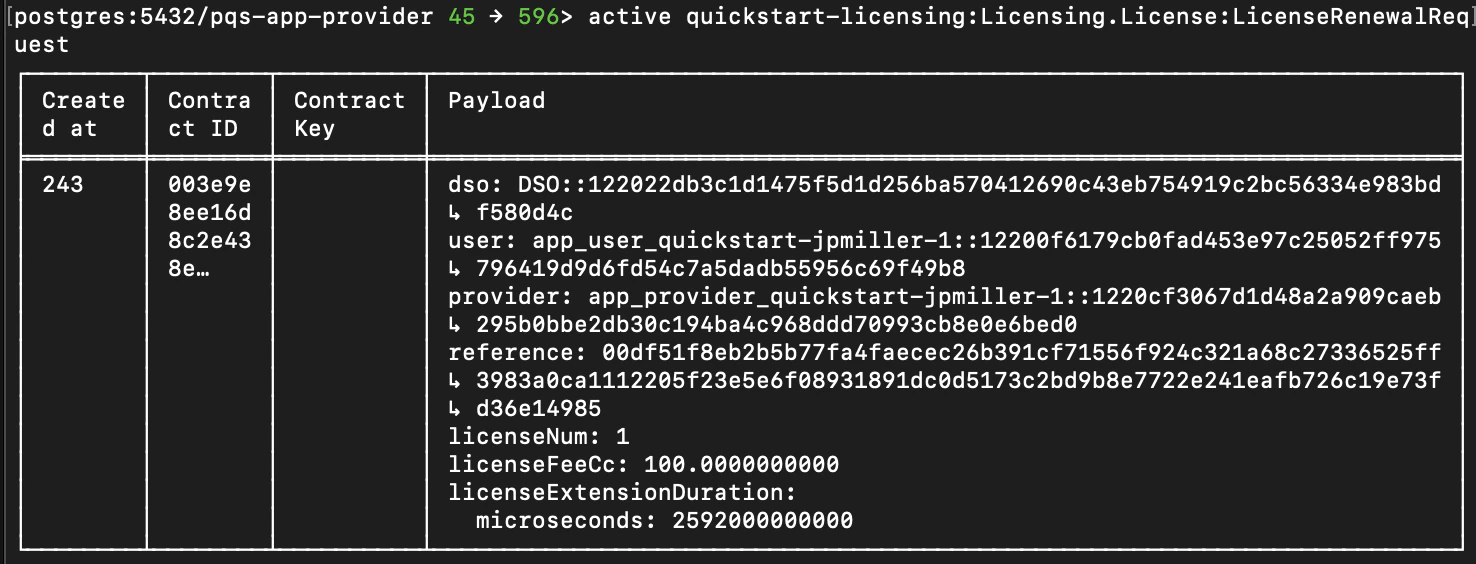
Daml Shell connects to the running PQS database of the application provider’s Participant. In the Shell, the assets and their details are available in real time.
Run the shell from quickstart/ in the terminal with:

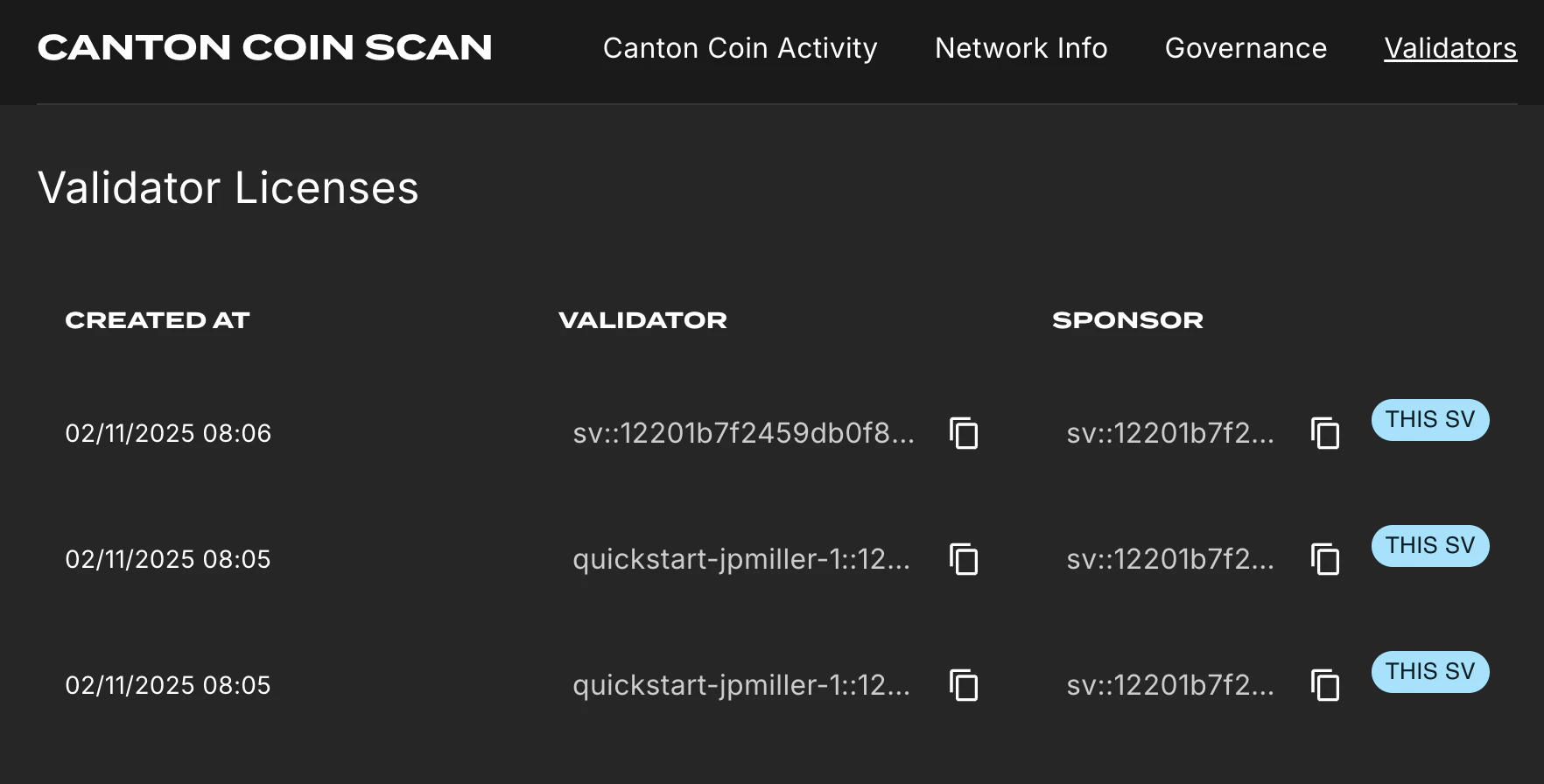
Canton Coin Scan
Explore the CC Scan Web UI at http://scan.localhost:4000/. The default activity view shows the total CC balance and the Validator rewards.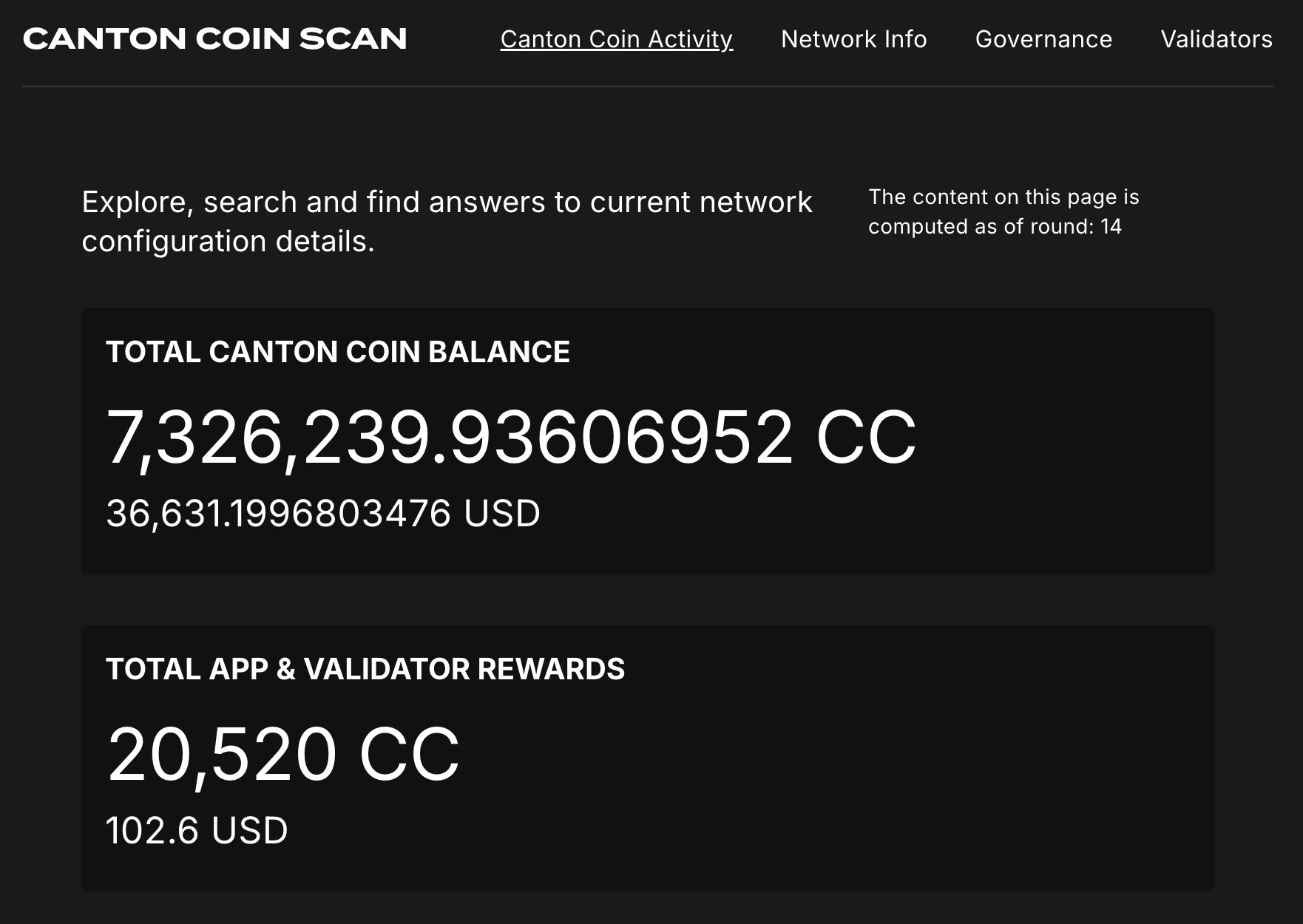
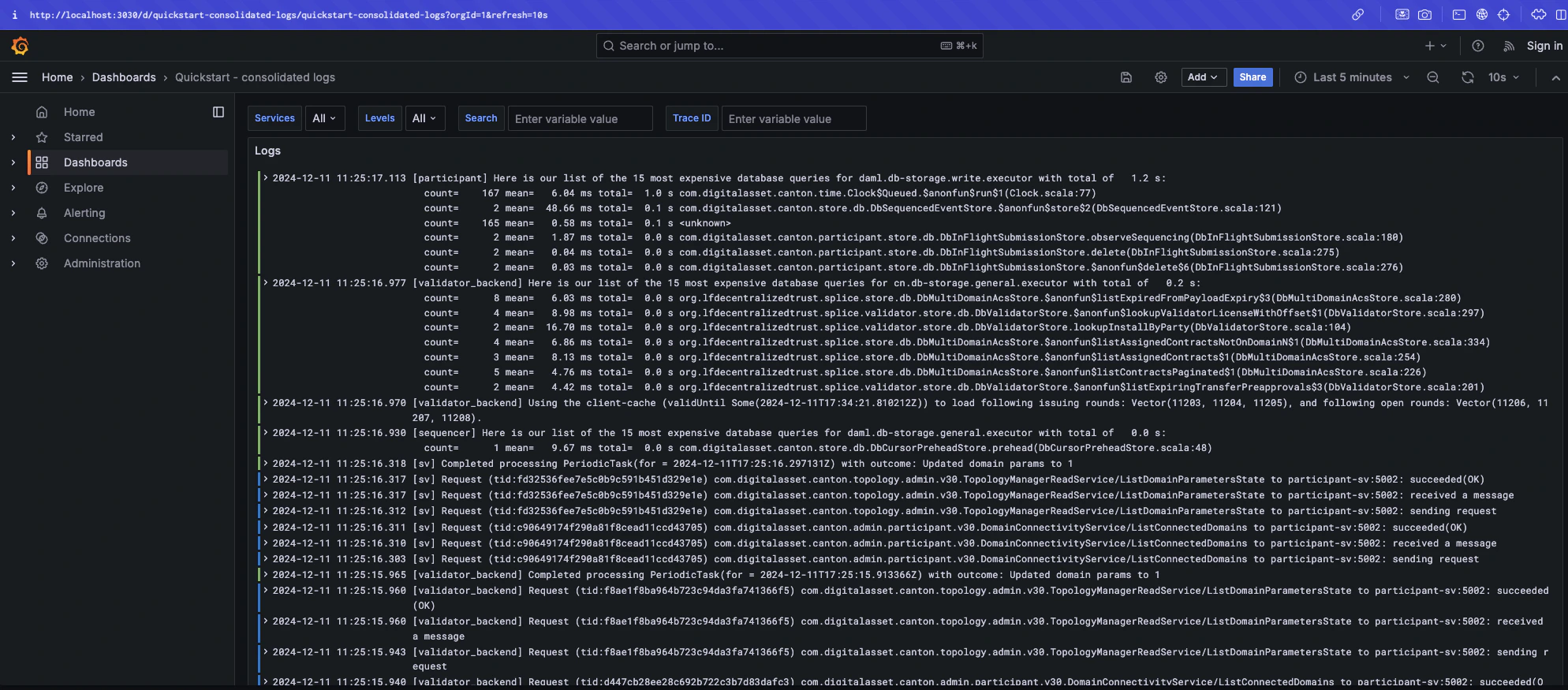
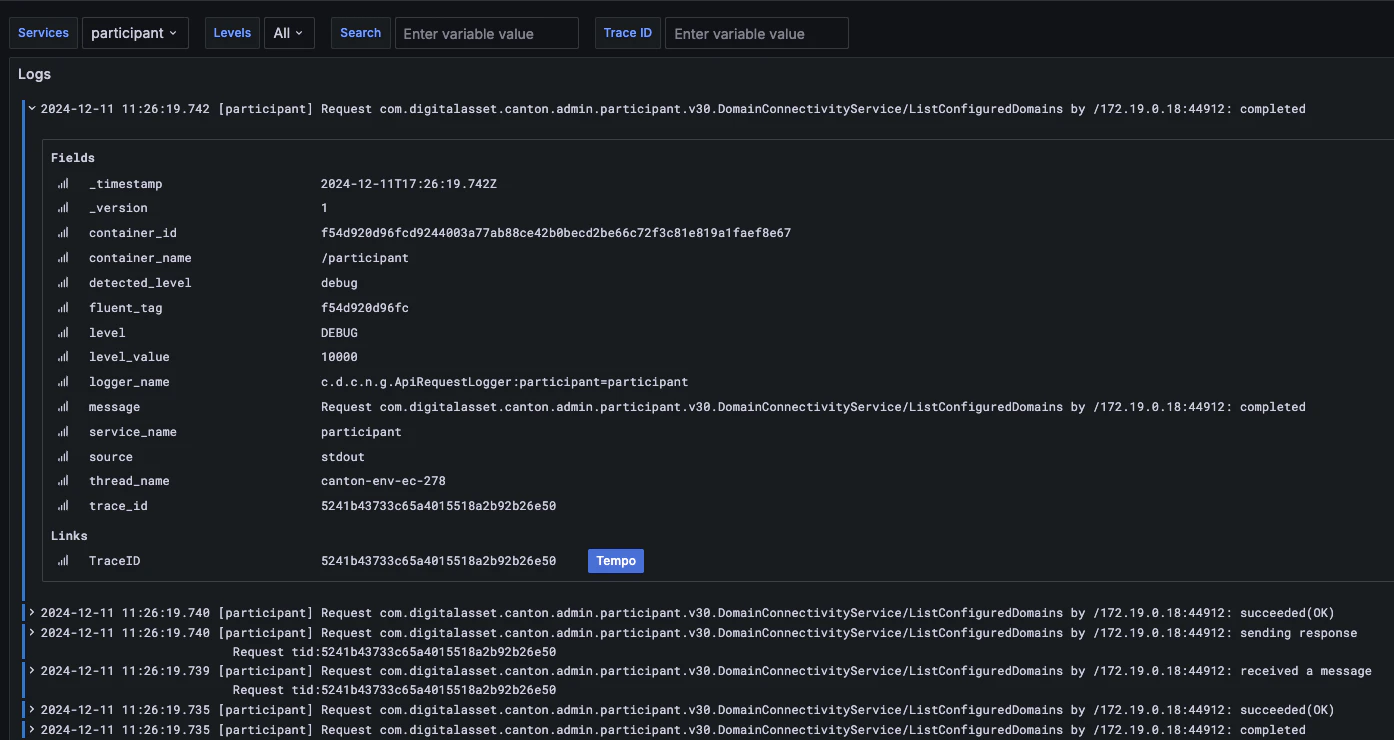
Observability Dashboard
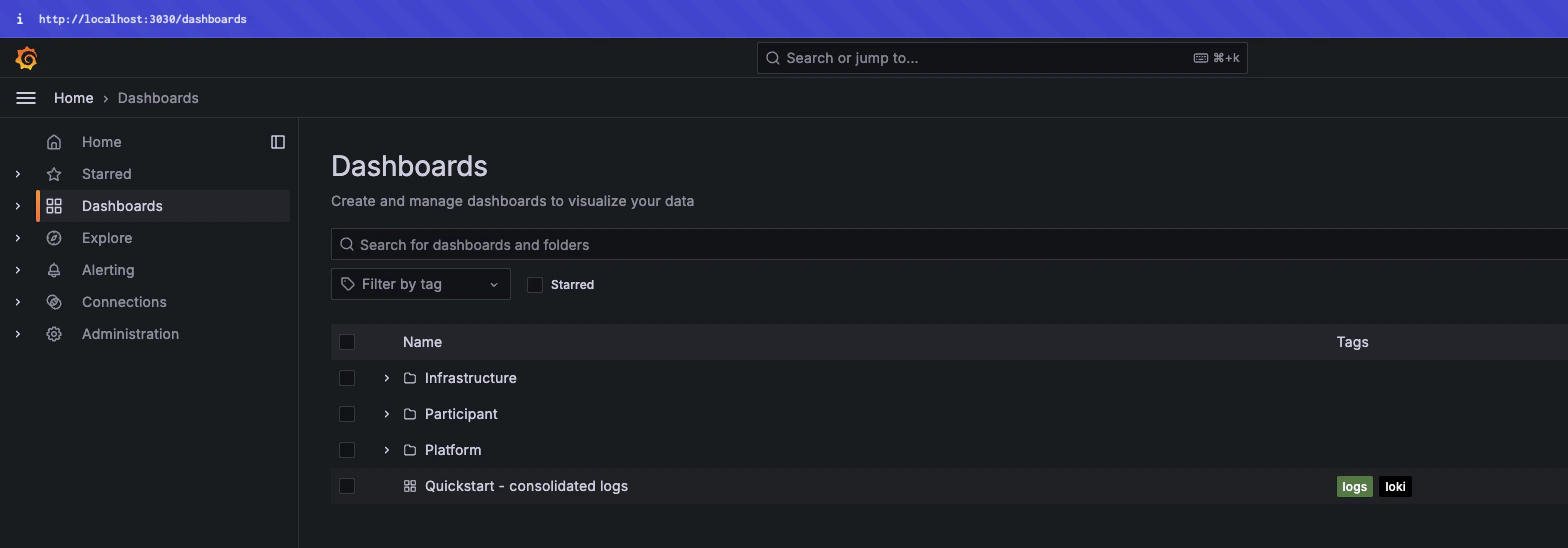
Observability may no longer work while App Quickstart is under revisions.
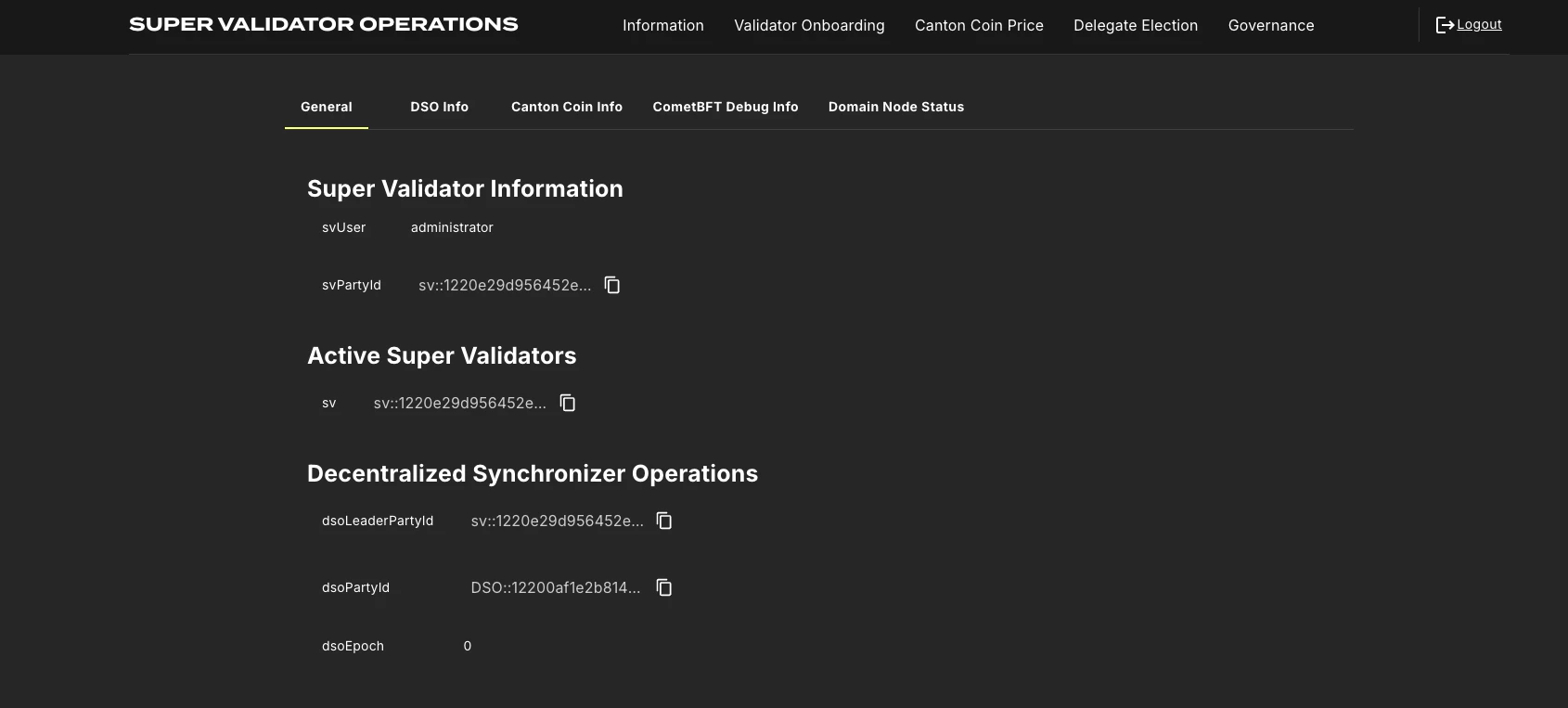
SV UIs
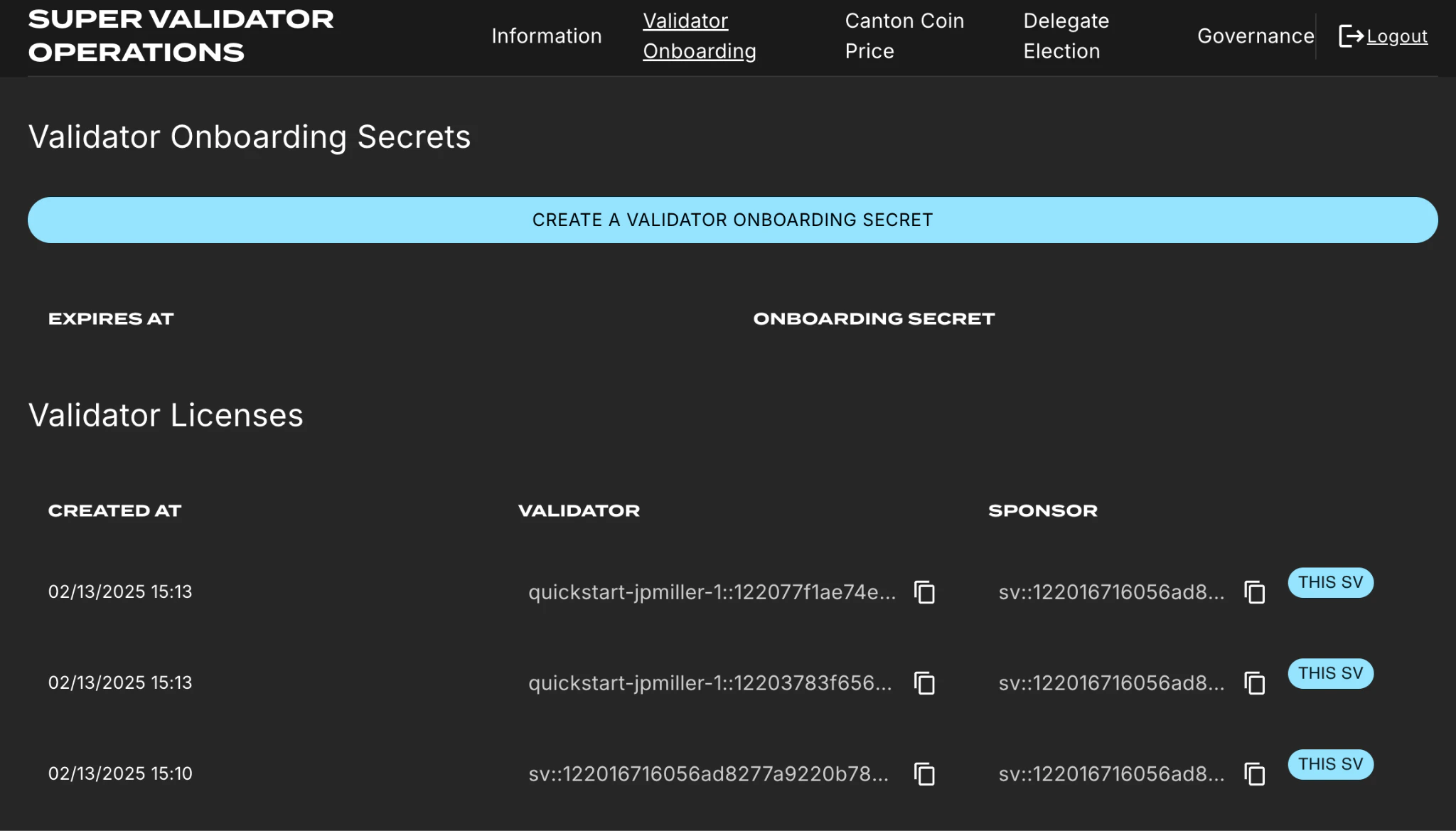
Navigate to http://sv.localhost:4000/ for the SV Web UI. The SV view displays data directly from the validator in a GUI that is straightforward to navigate. Login as ‘sv’.